Realistic 3D object and scene reconstruction is pivotal in advancing fields such as world model simulation and embodied intelligence.
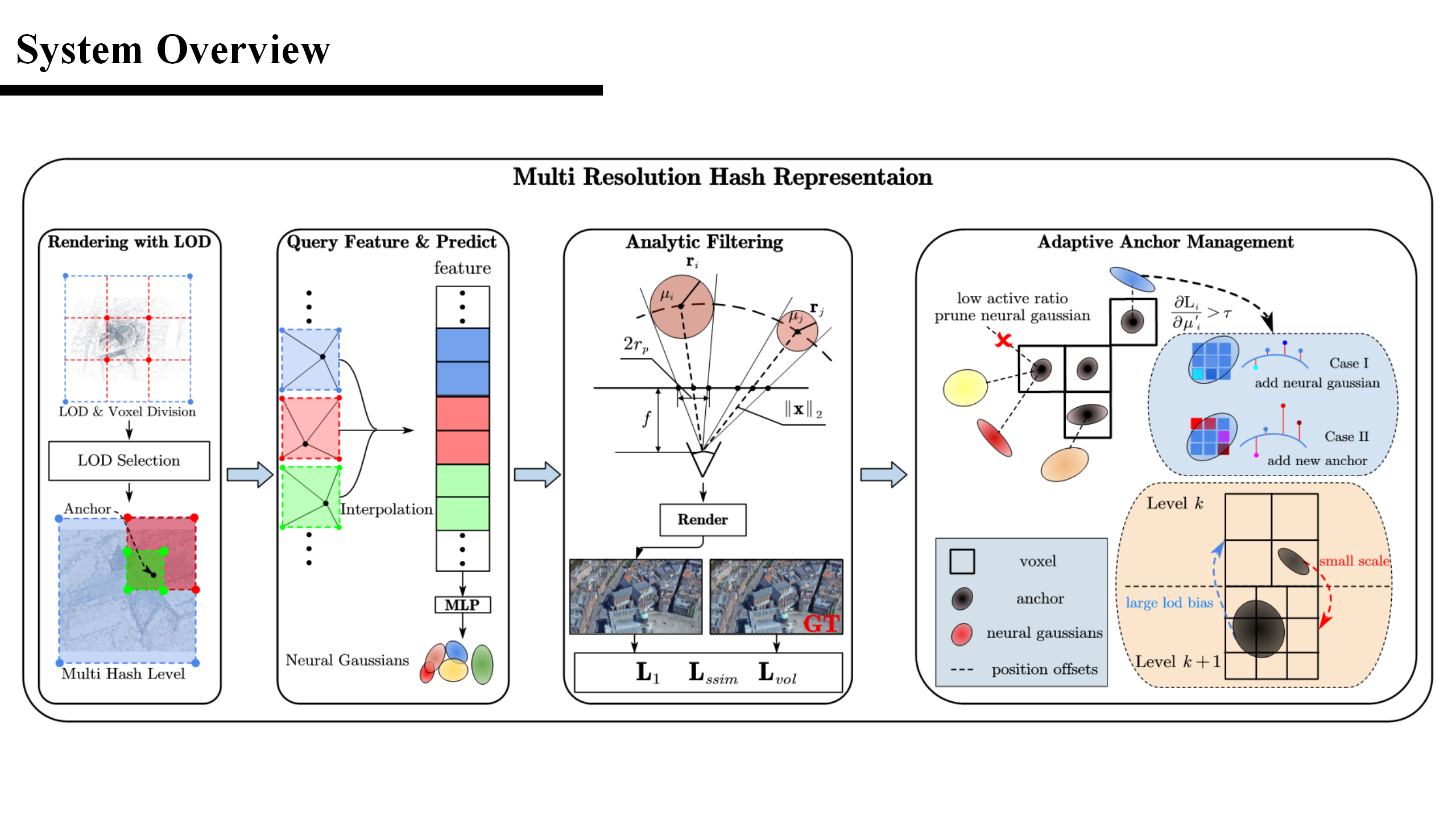
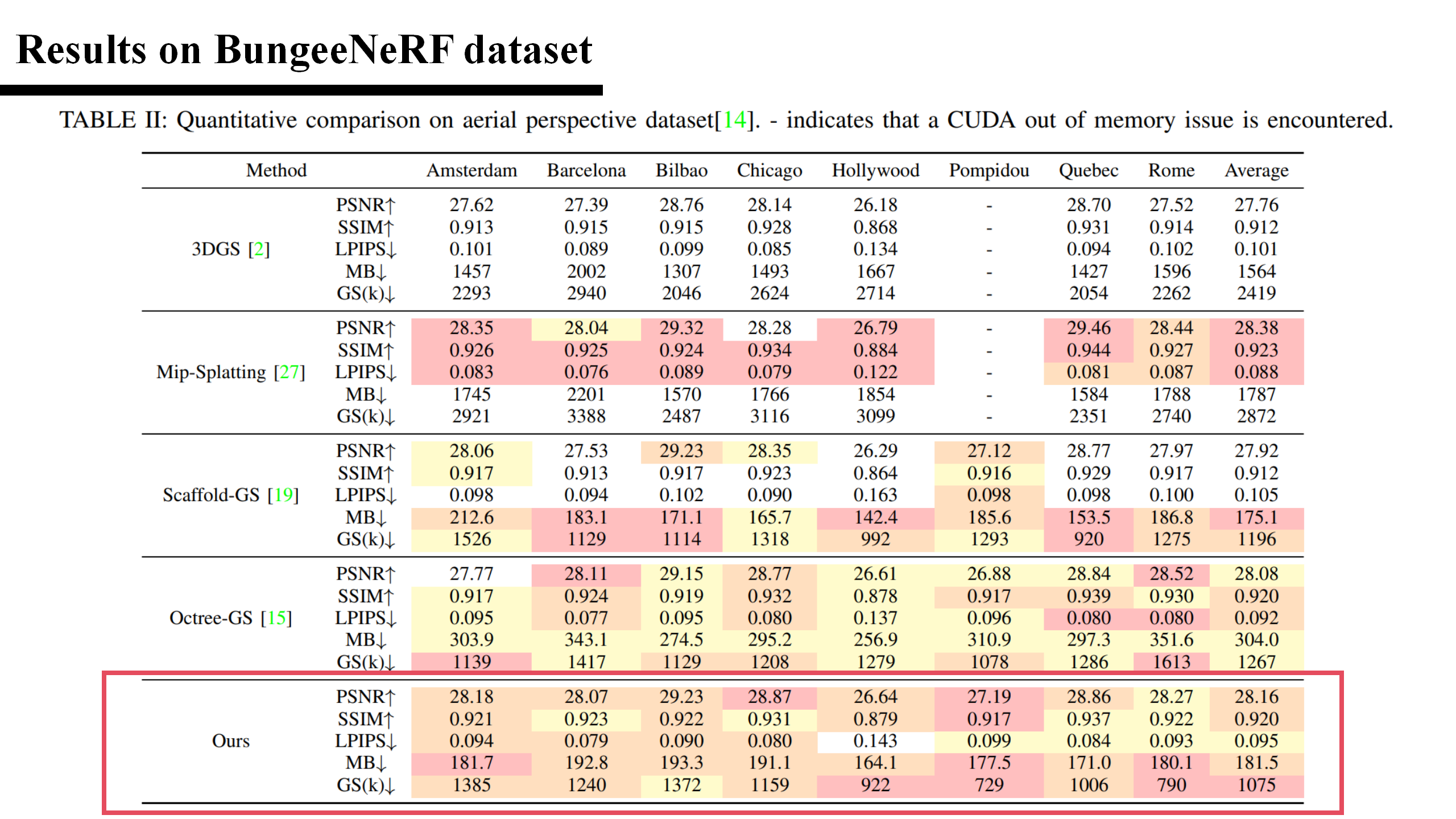
In this paper, we introduce Hash-GS, a storage-efficient method for large-scale scene reconstruction using anchor-based 3D Gaussian Splatting (3DGS).
The vanilla 3DGS struggles with high memory demands due to the large number of primitives, especially in complex or extensive scenes.
Hash-GS addresses these challenges with a compact representation by leveraging high-dimensional features to parameterize primitive properties, stored in compact hash tables, which reduces memory usage while preserving rendering quality.
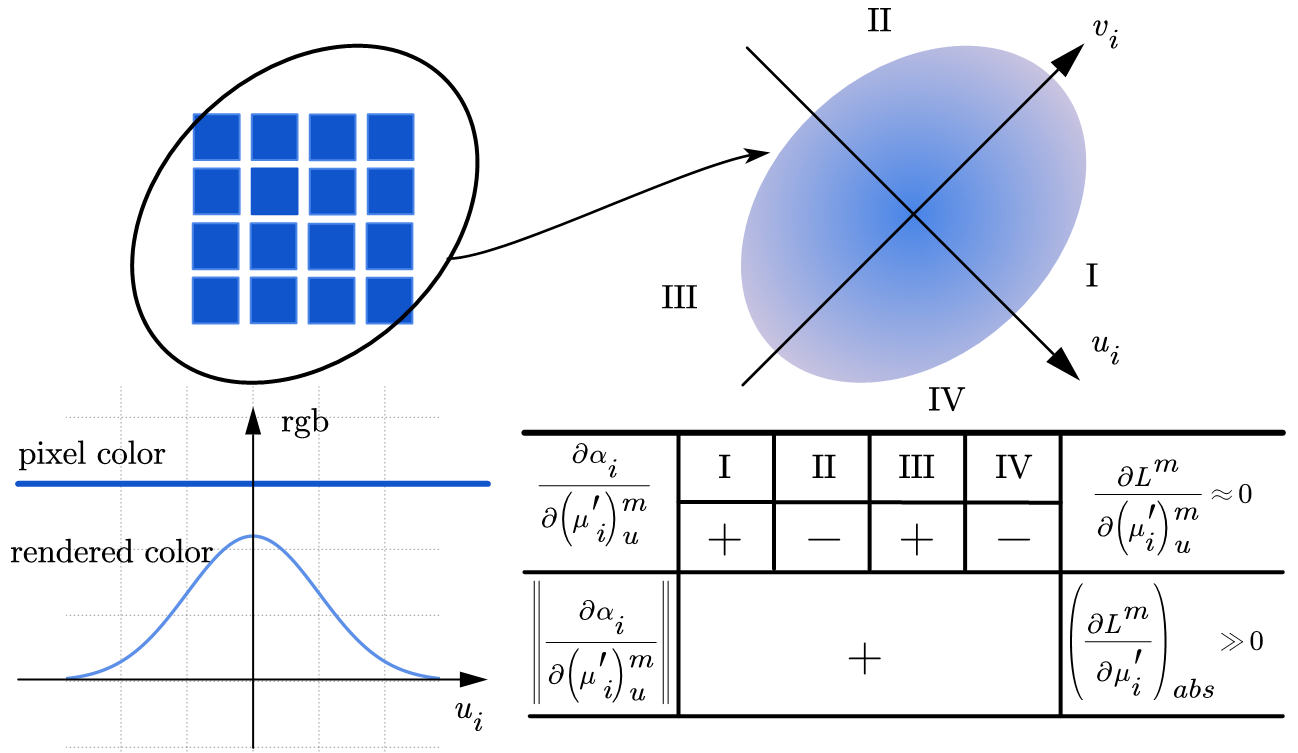
It also incorporates adaptive anchor management to efficiently control the number of anchors and neural Gaussians.
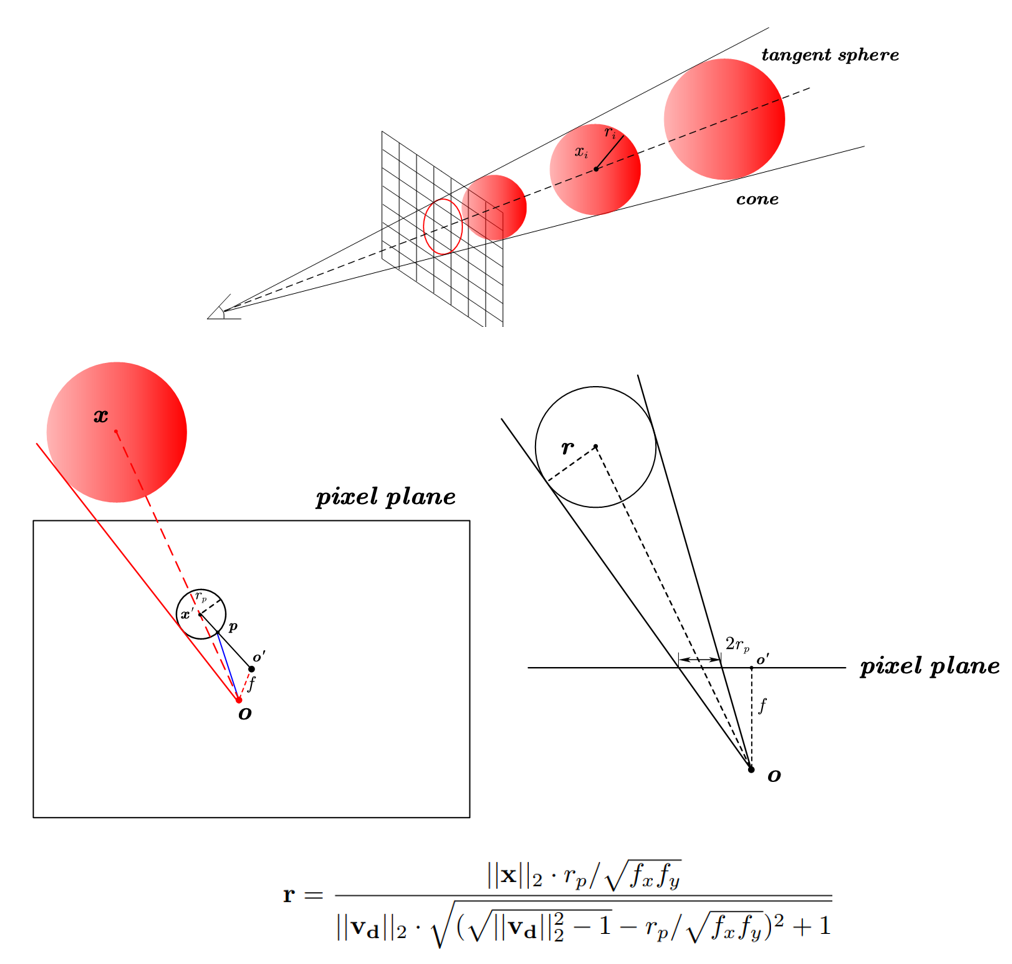
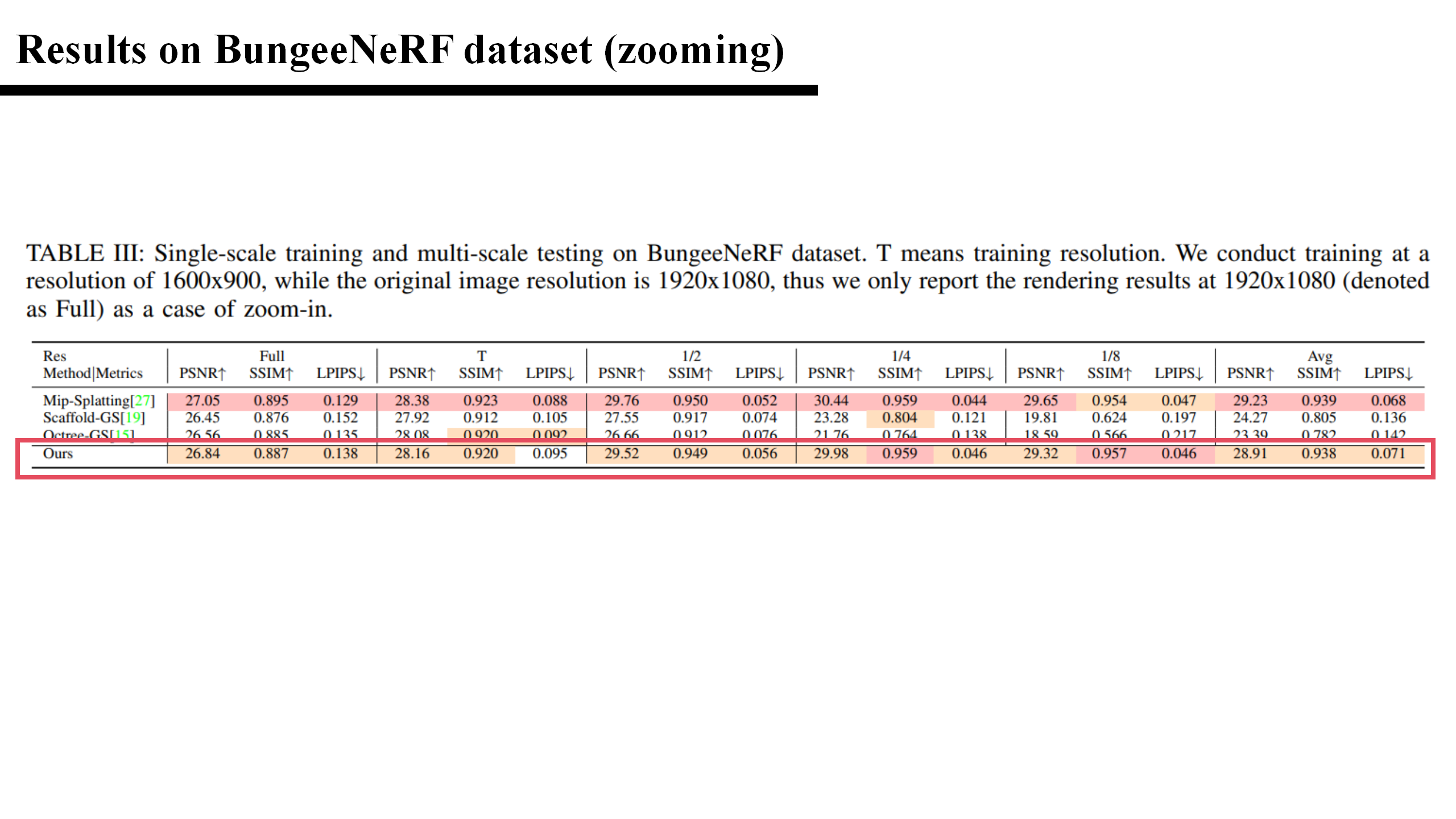
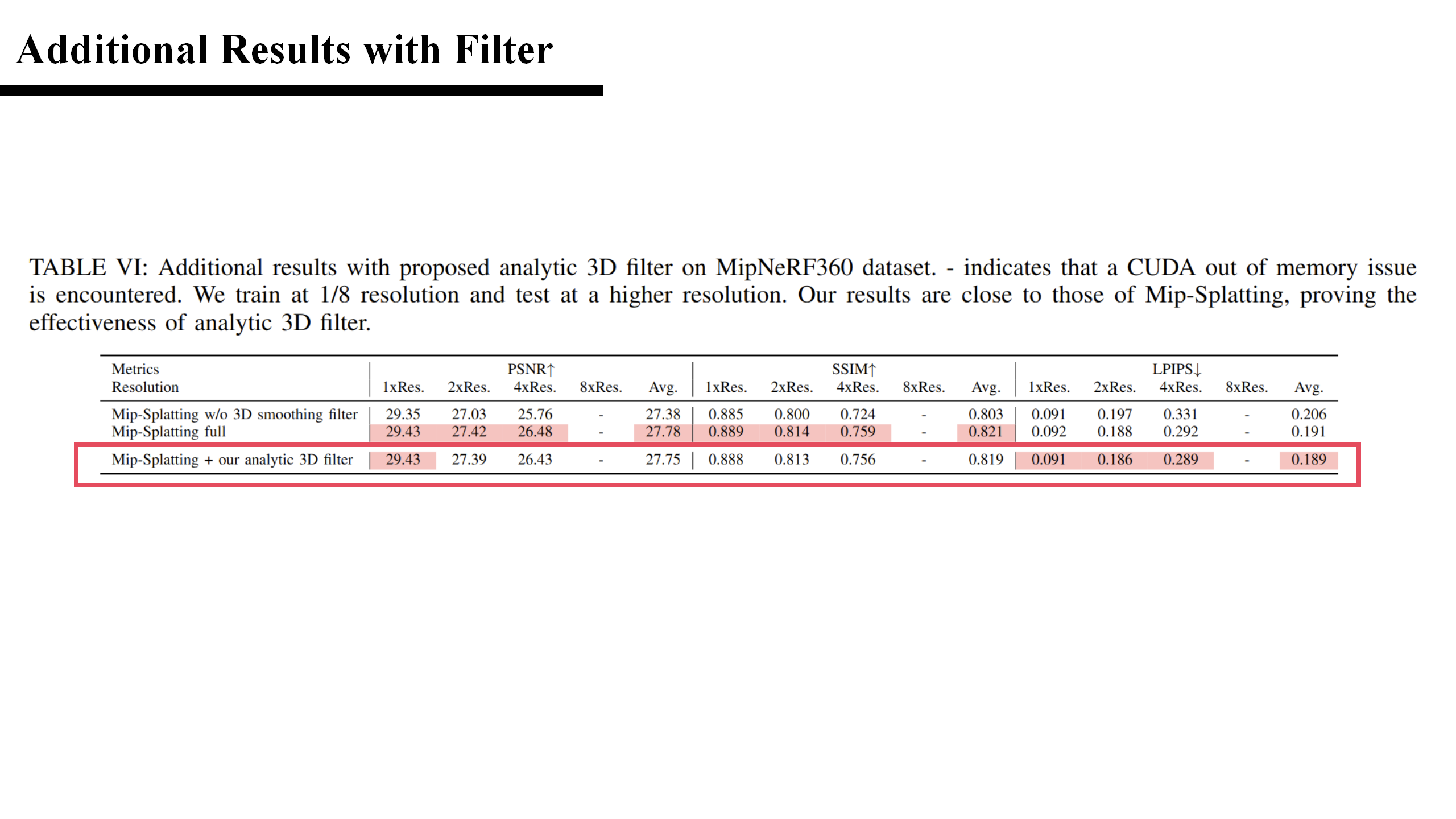
Additionally, we introduce an analytic 3D smoothing filter to mitigate aliasing and support Level-of-Detail for optimized rendering across varying intrinsic parameters.
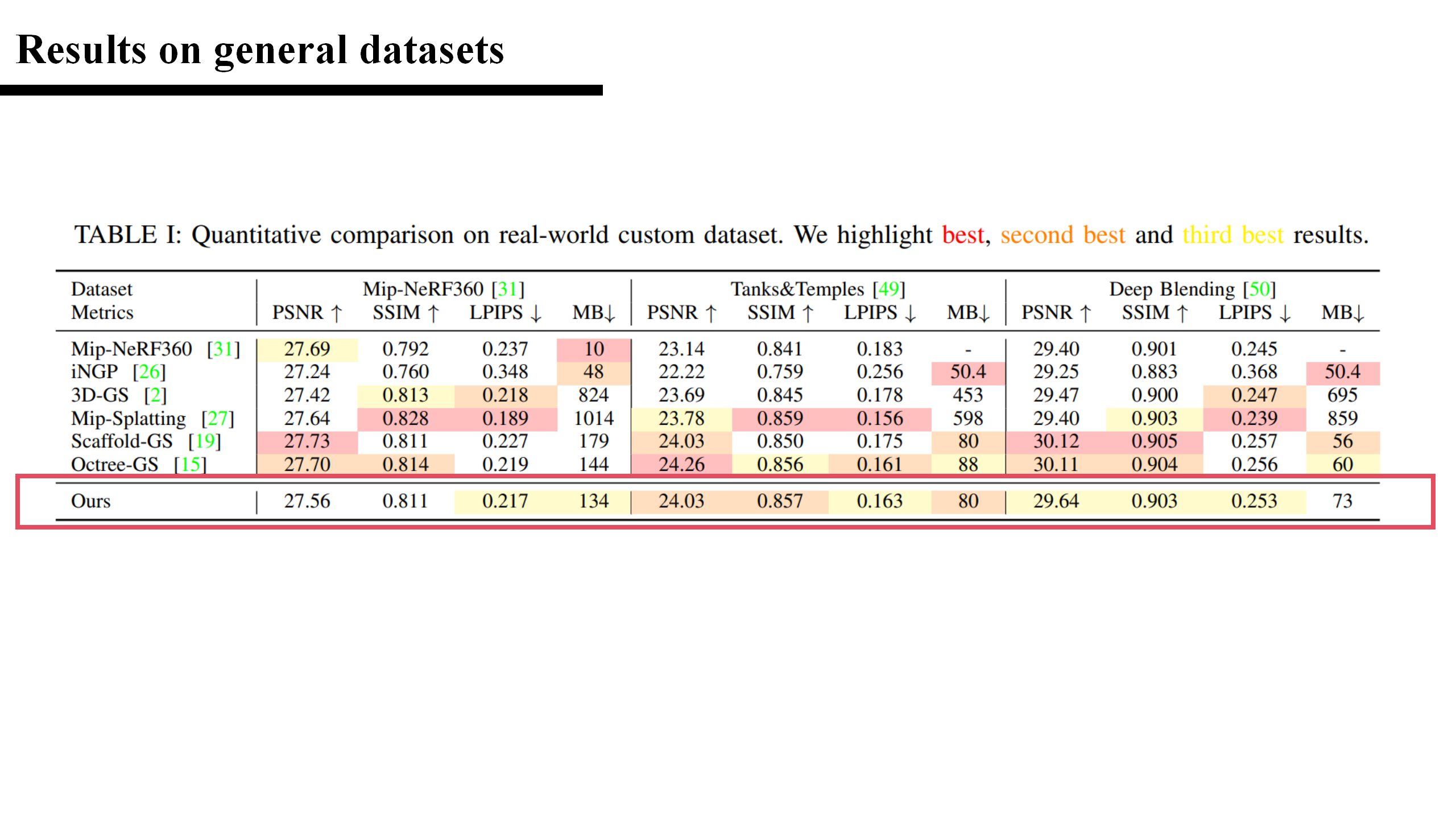
Experimental results on several datasets demonstrate that Hash-GS improves storage efficiency while maintaining competitive rendering performance, especially in large-scale scenes.